The grid capacity collapse nobody prices into logistics land
By Verónica Martín Tolosa MRICS (VMT 305) · Madrid
87% of Spain's electricity grid nodes are saturated. Only one in ten grid access applications is granted. The average connection delay exceeds five years.
And yet this data appears in almost no logistics due diligence report.
Investors entering secondary markets now — Tarragona, Zaragoza, southern Guadalajara, Murcia, Seville — are buying assets whose operational viability depends on electrical infrastructure that, in many cases, is not available or will take years to become so.
This is not a hypothetical risk. It is already stalling projects across Spain, and the market has not yet priced it correctly.
Why power is the most underestimated logistics risk
Modern logistics is not what it was ten years ago. Warehouse automation, refrigeration for food and pharmaceutical logistics, electric fleet charging and climate control for high-rotation space demand power levels that were not contemplated a decade ago when industrial parks were designed.
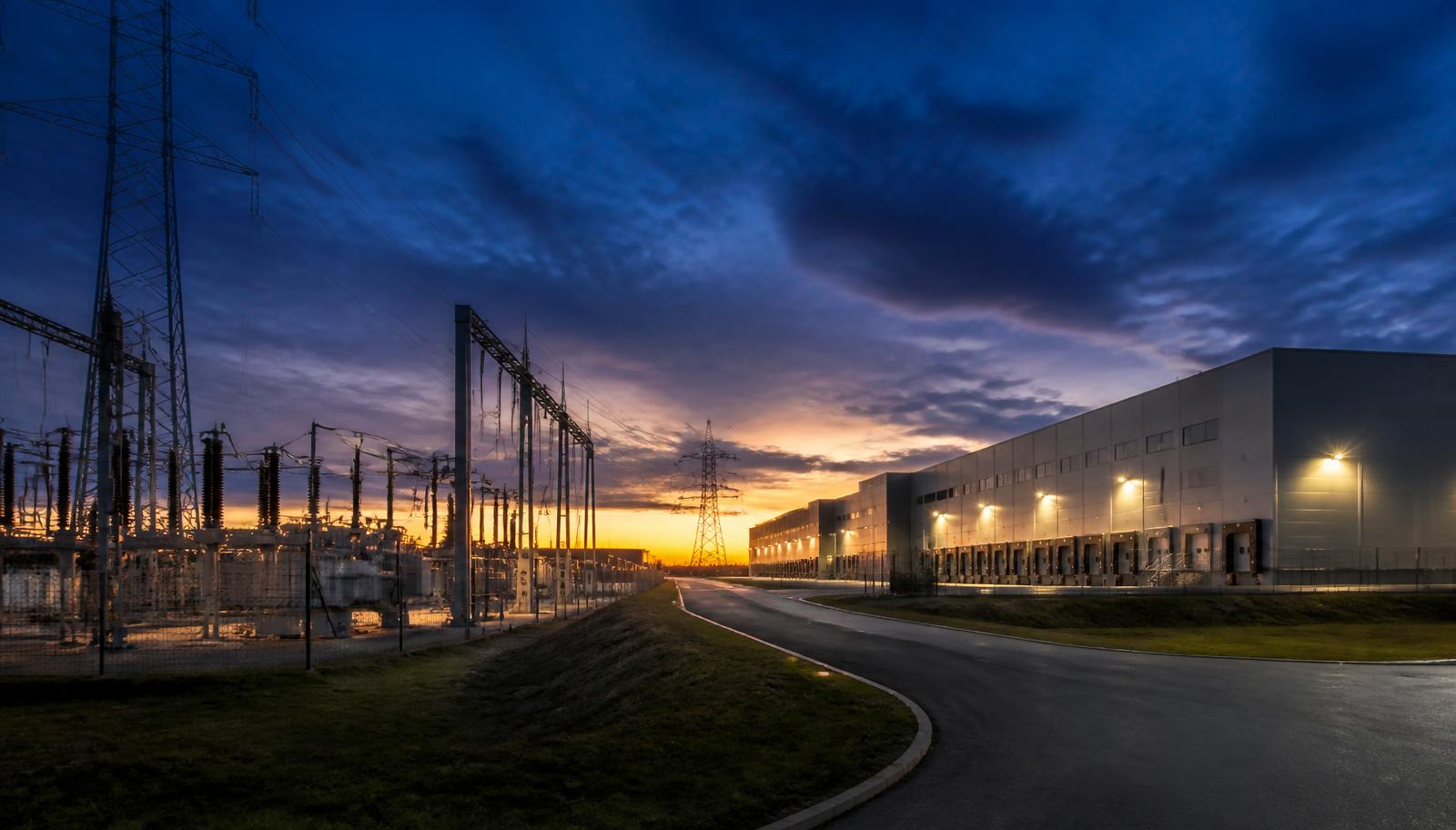
A standard 15,000 m² warehouse without automation may require 250 to 500 kW of contracted power. A warehouse with an automated storage system or cold storage can need two or three times that. Above 250 kW, a dedicated substation and a medium-voltage line to the park are almost always required.
The cost of that infrastructure — between €40,000 and €90,000 for the substation alone, excluding the line — is not in the land price. It appears in post-acquisition CAPEX, when the buyer can no longer renegotiate.
Grid saturation as an investment risk
The problem is not only cost. It is time.
With 87% of nodes saturated and waiting times exceeding five years in some areas, securing the power required to operate an advanced logistics facility can be the limiting factor of the entire investment.
A fund buying land in a secondary market to develop a Class A logistics platform may find the project ready, the tenant signed, the building complete — and no sufficient grid access to operate. Or a three-year wait to obtain it. This is already happening in several second and third ring parks.
What technical due diligence must verify
When we support an investor assessing a logistics asset — especially in secondary markets — the first thing we look at is not the roof. It is the connection. A rigorous logistics TDD must verify, as a minimum:
- Current contracted power and available power at the supply point. Not the theoretical maximum for the park, but what is actually available today for that asset.
- Condition of the dedicated substation. If it exists: capacity, installation year and condition. If not: whether it is needed for the intended use of the current or future tenant.
- Distribution network capacity at the relevant node. Saturation data is public; the distribution operator publishes grid access maps.
- Real lead times and costs for connection or upgrade, confirmed directly with the area's distribution operator.
- Forecast tenant requirements. A generalist operator, a temperature-controlled operator and one with an electric fleet have very different demand profiles.
Secondary markets: more opportunity, less visibility
The scarcity of first-ring logistics land — availability below 3% in Madrid and Catalonia — is pushing investors and developers into markets that were off the radar two years ago. The opportunity is real: land is cheaper and occupier demand is growing.
But secondary markets have less track record, electrical infrastructure is more variable and planning timelines are less predictable. Those who enter informed capture value. Those who enter without verifying electrical infrastructure take on a risk the purchase price does not reflect.
One question before signing
How much real electrical capacity does this asset have, and is it enough for what the tenant will need over the next ten years? If the answer is not in the TDD, the TDD is incomplete.
If you are assessing logistics assets in Spain and want a technical due diligence that includes electrical infrastructure analysis, let's talk.
Assess a logistics asset